Rotten Tomatoes Alternatives: 6 Sites Worth Using in 2026

There is no single site that replaces Rotten Tomatoes. IMDb is the best all-purpose database, Letterboxd is the best for film lovers who want a community, Metacritic is the closest critic-only rival, JustWatch tells you where to stream, and Book Marks covers books. Pick based on the question you’re asking, not on which number looks nicest.
Below, we explain what Rotten Tomatoes actually measures, how each alternative differs, and how to combine them. We also say where our own product, a trading indicator, fits into a conversation about aggregated opinion. It isn’t a movie site, and we won’t pretend it is.
TL;DR
- Rotten Tomatoes reports the share of approved critics who liked a film, not an average grade, so other sites’ numbers answer different questions.
- IMDb suits cast and crew research and a sortable watchlist. Letterboxd suits logging, lists and discovery. Metacritic suits a critic-only score on a 0 to 100 scale.
- JustWatch is a companion for finding where a title streams in the U.S., not a review site.
- For books, Book Marks is the closest critic-style match, and Goodreads is better for reader opinion.
- The most reliable habit is to use two or three sites and read a few actual reviews.
Table of Contents
- What Rotten Tomatoes measures, and what it doesn’t
- Rotten Tomatoes alternatives at a glance
- IMDb: the all-purpose database
- Letterboxd: for people who love talking about film
- Metacritic: the closest critic-only rival
- JustWatch: the companion for “where can I watch this?”
- For books: Book Marks and Goodreads
- A simple multi-site routine
- Our perspective: scores summarize opinion, they don’t make decisions
- If you also trade: where Big Move Algo fits
- Which one should you pick?
- FAQ
- Sources
What Rotten Tomatoes measures, and what it doesn’t
Before swapping sites, it helps to know what you’re swapping away from. The Tomatometer is the percentage of approved professional reviews classified as positive, and Fresh begins at 60%. A 90% score therefore doesn’t mean critics gave the film 9 out of 10. It means roughly nine in ten approved critics gave it a thumbs-up of some kind, and some of those may have been lukewarm.
The site is legitimate as a review aggregator. It says its scores come from approved critics, with curators gathering and classifying the reviews. That makes the score a curated classification rather than an objective measurement of quality. It is useful, but it is a judgment call by people applying a system.
Two more details matter if you’re deciding whether to leave:
- Audience scores are separate. The Popcornmeter is not the Tomatometer. Audience scores only appear after a threshold, which the FAQ puts at 50 ratings or reviews for movies and 25 for a TV season.
- Not just anyone sets the critic score. Ordinary logged-in users can rate and review, but critic reviews that feed the Tomatometer must come from a Tomatometer-approved critic or publication.
Rotten Tomatoes also introduced Verified Ratings and Reviews to answer skepticism about online audience scores. If your main complaint is that audience numbers feel easy to game, check whether the verified figure tells a different story before you abandon the site.
Rotten Tomatoes alternatives at a glance
| Site | Best for | Score type | Main weakness |
|---|---|---|---|
| IMDb | Cast, crew, title lookup, watchlists | Weighted average of user ratings, 1 to 10 | Headline number is user-generated, not a critic consensus |
| Letterboxd | Film logging, lists, community discovery | Weighted community rating | Reflects its own community, not the general public |
| Metacritic | Critic-only scoring with more granularity | 0 to 100 Metascore plus separate user score | Metascore is not a percentage of critics who liked a film |
| JustWatch | Finding where to watch in the U.S. | None, it’s a streaming guide | Availability changes, so confirm before paying |
| Book Marks | Book reviews from professional critics | Rave, Positive, Mixed, Pan | Labels aren’t comparable to numeric scores |
| Goodreads | Reader shelves and crowd opinion | Reader ratings | Not a critic aggregator |
IMDb: the all-purpose database
If you want the nearest thing to a one-stop replacement, start here. Registered IMDb users rate released titles from 1 to 10, and the displayed rating is a weighted figure rather than a plain arithmetic mean. It’s strongest for looking up cast and crew, identifying a half-remembered title and gauging general viewer sentiment.
Its Watchlist lets you track what you want to see and sort it by rating, popularity or a custom order, which makes it a practical to-watch queue.
The limit is the thing you came for. Because the headline rating comes from users, IMDb is a weaker substitute if you specifically want a professional-critic verdict. One habit worth borrowing: IMDb itself warns that its rating is only one number and offers a rating-distribution breakdown. A film with a 7.0 built from mostly 7s is a different bet than one built from a pile of 10s and a pile of 1s. Look at the spread and the vote count, not only the headline.
Letterboxd: for people who love talking about film
Letterboxd works differently. Members log what they’ve watched, write reviews, build lists and rate films, and those ratings feed community scores. It’s the best option when you want discovery and conversation instead of a binary critics’ verdict.
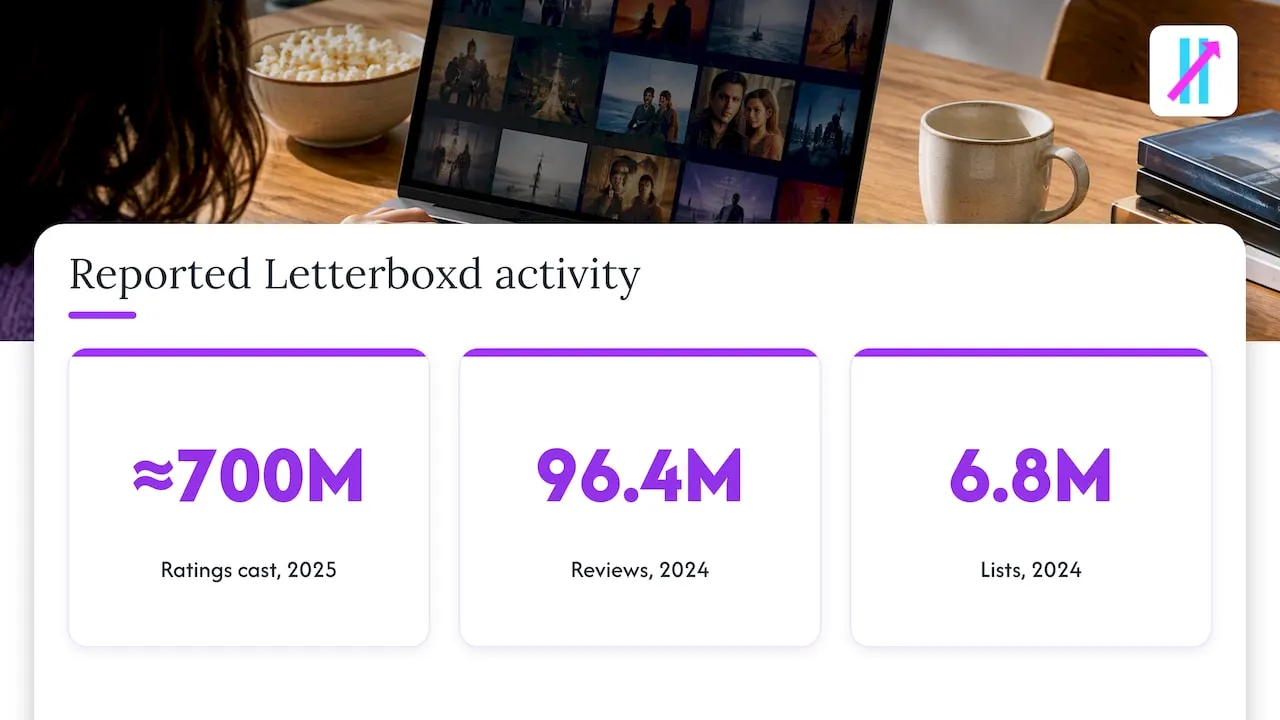
The community is large and active. Letterboxd’s own year-in-review pages report nearly 700 million ratings cast in 2025 and, for the previous year, 96.4 million reviews and 6.8 million lists. Those are platform-reported activity figures. They show a busy community, not that its ratings represent the average American moviegoer, and the audience skews toward people who care enough about film to log it.
Letterboxd is also open about the weakness of crowd scores. In 2023 it changed its weighted-rating calculation, the biggest change since 2011, to better reflect the community’s global consensus. Weighting reduces the effect of fandom and organized rating patterns, but it can’t remove them.
So is Letterboxd better than Rotten Tomatoes? Only for certain jobs. Rotten Tomatoes is faster for a quick critic-versus-audience check before a Friday night. Letterboxd is better for keeping a diary, building lists and reading detailed community takes. Their numbers use different populations and scoring systems, so don’t compare them directly.
Metacritic: the closest critic-only rival
If what you like about Rotten Tomatoes is the critics, and what you dislike is the Fresh/Rotten binary, Metacritic is the obvious next stop. Its film pages show a 0 to 100 Metascore based on critic reviews, with a separate user score alongside.
That extra granularity helps you tell a warm recommendation from a rave. It also exposes gaps between critics and audiences. On Metacritic, Pi shows a 72 Metascore and a 7.3 user score, which are roughly in step. Maestro shows a 77 Metascore against a 5.9 user score, a clear split.
One caution: a Metascore is not the share of critics who liked a film. A 77 here and a 77% on Rotten Tomatoes mean different things. The first is a weighted-style score of critic grades. The second is the proportion of positive reviews.
JustWatch: the companion for “where can I watch this?”
Sometimes the real reason you opened Rotten Tomatoes was to pick something to watch tonight. JustWatch is built for that. One search checks listed subscription, free, rental and purchase options across U.S. streaming services.
It isn’t a review site and it doesn’t play anything itself. Availability changes by market and by month, so confirm the offer on the provider’s own page before you pay or sign up for a trial.
For books: Book Marks and Goodreads
People also ask for a Rotten Tomatoes for books. The closest match is Book Marks, which aggregates professional literary criticism and sorts reception into Rave, Positive, Mixed or Pan, with excerpts and links to the original reviews. Those labels are qualitative, so use the linked reviews to understand why critics landed where they did.
Goodreads fits a different need: a big reader community, shelves and crowd opinion. It isn’t a professional-critic aggregator. Book-review experts at BookBrowse recommend combining professional reviews with reader reactions and reading the reasons behind praise or criticism instead of hunting for one objective score.
A simple multi-site routine
No single alternative covers everything Rotten Tomatoes does, so most careful viewers end up with a small stack:
- Decide what you want to know. Consensus direction, critic intensity, audience sentiment or personal discovery each point to a different site.
- Check one critic source. Rotten Tomatoes or Metacritic. If they disagree sharply, read two or three reviews from each side.
- Check one audience source. IMDb or Letterboxd. Look at the rating distribution and the number of ratings, not just the average.
- Look up the details on IMDb. Cast, credits and release information are quick there.
- Find where it streams. Use JustWatch, then confirm at the provider.
This takes about two minutes and beats trusting any single number. Rotten Tomatoes’ own methodology explains why alternatives seem to disagree: it counts the share of positive reviews, while others commonly report averages or weighted scores. Disagreement is often just different math.
Our perspective: scores summarize opinion, they don’t make decisions
We build trading software, not a review site, so we come at this from the side of someone who has watched people lean too hard on a single number. The pattern is familiar. A crowd score or a consensus feels like certainty, so people stop looking at what’s underneath it.
Our work starts from the opposite premise. Big Move Algo is a TradingView indicator that analyzes markets in real time and gives clear Long, Short and Exit signals, and it includes a Fake Trend Detector that flags low-quality conditions where trading may not be recommended. That last feature is the same idea as reading a rating distribution: a headline output is only trustworthy when you also know when to distrust it.
We design for clarity because too many tools bury users in settings and data. AUTO Mode needs minimal setup, and Manual Mode is there for experienced traders who want more control. The lesson carries over to movies and books: pick a simple tool, understand how it’s calculated, and use a second source when the stakes are higher.
None of this makes an indicator a substitute for a review aggregator, or the reverse. They answer different questions, and the sensible move is to use each for what it does well.
— Steven Hartwell
If you also trade: where Big Move Algo fits
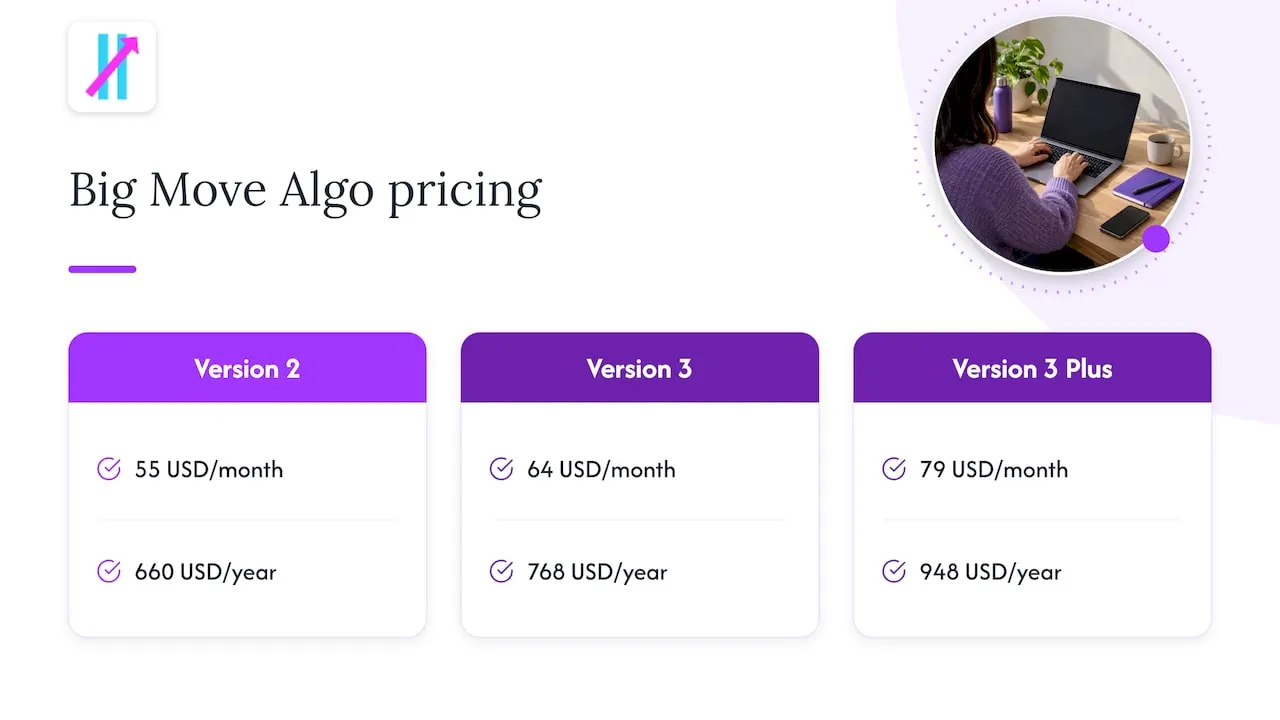
Some readers who care about structured, rules-based decisions in entertainment also care about them in markets. If you use TradingView and want clearer signals across crypto, forex, stocks, indices and commodities, you can see our plans on the Big Move Algo site. Pricing as published: Version 2 is 55 USD per month or 660 USD per year, Version 3 is 64 USD per month or 768 USD per year, and Version 3 Plus is 79 USD per month or 948 USD per year. Access is instant after purchase, and payments run through Stripe.
If you’re new to organizing what you follow, our guide to what a TradingView watchlist is works the same way as an IMDb watchlist, only for tickers instead of titles. Already a subscriber and need to switch accounts? Use the change TradingView account page.
Trading involves risk of loss, and no indicator guarantees results. If you’re unsure whether trading suits your finances, talk to a licensed financial adviser first.
Which one should you pick?
- You want critics and a finer scale: Metacritic.
- You want a database plus audience sentiment: IMDb.
- You want a film community, diary and lists: Letterboxd.
- You want to know where it’s streaming: JustWatch.
- You want book criticism: Book Marks, with Goodreads for reader opinion.
- You want a quick consensus check: stay with Rotten Tomatoes, and look at the verified audience figure.
FAQ
Is Rottentomatoes.com legit?
Yes, as a review aggregator. It says its Tomatometer reviews come from approved critics and that its curators gather and classify them. Treat the score as a curated classification rather than a measure of quality, and read a few reviews for context.
Is there a website like Rotten Tomatoes but for books?
Book Marks is the closest. It aggregates professional literary reviews and labels reception as Rave, Positive, Mixed or Pan, linking to the originals. Goodreads is better if you want reader shelves and crowd opinion.
Is Rotten Tomatoes or Letterboxd better?
It depends on the job. Rotten Tomatoes is quicker for a critic-versus-audience check, while Letterboxd is better for logging films, making lists and discovering titles through a community. Their scores use different systems and populations, so don’t treat the numbers as interchangeable.
Can anyone rate movies on Rotten Tomatoes?
Logged-in users can submit audience ratings and reviews, and the FAQ gives a review length range of 8 to 1,000 characters. The critic score is different: only approved critics and publications contribute to the Tomatometer. Verified Ratings are a separate subset tied to confirmed ticket purchases.
Sources
- Rotten Tomatoes FAQ
- About Rotten Tomatoes
- Rotten Tomatoes: Verified Ratings and Reviews
- IMDb Help: ratings
- IMDb Help: Watchlist
- Letterboxd 2025 year in review
- Letterboxd 2024 year in review
- Letterboxd: weighted ratings update
- Metacritic: Pi
- Metacritic: Maestro
- JustWatch
- Book Marks
- BookBrowse: best book review websites