
6 Rules Traders Use to Choose Long vs Short Bias: Structure + Signals

Updated: 2 days ago

Long bias means you default to buying and holding through pullbacks because prices tend to drift upward over time. Short bias means you default to selling first, betting on declines, and it usually costs more to run because of borrowing and margin. Most retail and positional traders lean long; short bias tends to suit experienced traders, hedge funds, and specialists who can manage the extra mechanics and risk.
TL;DR:
Most traders leaning long should monitor their position for broad market declines, which can cause significant drawdowns without a natural hedge.
Short bias requires managing higher costs such as borrow fees and the risk of unlimited losses, and is best suited for experienced traders comfortable with these mechanics.
Confirm your market trend on higher timeframes before choosing a bias, and always verify with positioning data like funding rates and open interest.
Use structured signals or trading tools to translate your bias into specific entry and exit points, reducing emotional decision-making.
Maintain discipline by setting and following pre-determined drawdown limits, especially when trading short, to avoid destructive losses.
Table of Contents
Long vs Short Bias: Strengths, Weaknesses, and When Each Wins
Long bias wins on simplicity. You buy, you hold, and time does a lot of the work through compounding and the general upward drift of equity markets over long stretches. It fits trend-following approaches well, especially in instruments that trend more reliably than single stocks, like commodities or major crypto pairs. The downside is obvious in a real drawdown: a long-only portfolio has no built-in brake when the market turns.
Short bias flips that trade. It profits when prices fall, which makes it valuable for event-driven ideas (fraud, weak earnings, broken business models) and as a hedge against a long book. But it’s operationally harder. You’re borrowing shares you don’t own, paying fees to hold that position, and facing theoretically unlimited loss if the trade moves against you.
That asymmetry explains a pattern across the fund world: most long/short equity funds keep a net long tilt because good short ideas are scarcer and costlier to hold than good long ideas. Dedicated short-bias funds exist, but they’re the exception, not the rule.
Long bias fits: trend-followers, buy-and-hold investors, retail traders without margin accounts
Short bias fits: hedge funds, event-driven traders, experienced traders comfortable with borrow costs and squeeze risk
Long bias risk: drawdowns during broad declines, no natural hedge
Short bias risk: unlimited loss potential, forced buy-ins, borrow fee spikes
How Do You Choose Long vs Short Bias for a Trade?
Start with market structure on a higher timeframe than the one you plan to trade. If the daily and weekly charts show a clear uptrend, fighting that with short entries on a five-minute chart is a losing habit dressed up as a strategy. Trade with the dominant flow unless you have a specific, tested reason to fade it.
Timeframe changes how much bias matters. Day traders can flip bias several times a session based on intraday structure. Swing traders usually hold a bias for days to weeks, tied to a clear trend or range. Positional traders and investors often hold a bias for months, riding broader cycles.
Positioning data adds a second layer. The long/short ratio, funding rates, and open interest tell you how crowded a trade already is, which helps confirm or contradict what the price chart is showing.
Check the higher-timeframe trend before picking a bias
Match your bias to your actual holding period, not your mood
Confirm with positioning data (ratio, funding, open interest)
Verify the instrument is liquid enough to enter and exit cleanly
If shorting, confirm shares are available to borrow before committing
Size the position for the current volatility regime
Pro Tip: Never let a single indicator override structure. If price is making higher highs but the long/short ratio looks stretched, treat that as a caution flag, not a reversal signal.
The Mechanics Behind Short Selling, Margin, and Borrow Costs
Short bias requires more plumbing than long bias. To open a short, you need to locate shares, borrow them from your broker, sell them (“sell to open”), and eventually buy them back to close the position and return what you borrowed. Investor for anyone new to shorting.
That borrowing isn’t free, and it isn’t guaranteed. Costs and risks include:
Margin interest charged on the borrowed value of the position
Borrow fees, which spike sharply on hard-to-borrow stocks
Recall risk, where your broker demands the shares back and forces you to close early
Margin maintenance requirements, which the SEC documents in detail and which vary by broker
The 2021 GameStop short squeeze is the textbook case of what happens when a heavily shorted stock gets recalled en masse. Borrow costs exploded, forced buying accelerated the price spike, and shorts who couldn’t cover fast enough took outsized losses. That’s the tail risk long bias simply doesn’t carry.
Risk Management: Position Sizing and Hedging for Each Bias
Position sizing has to account for the asymmetry between the two biases. A long position can only lose 100% of what you put in. A short position, in theory, has no ceiling on the loss, since there’s no cap on how high a price can run. That alone justifies smaller size on short trades relative to long ones, all else equal.
Hedging tools differ too:
Long-biased portfolios often lean on index overlays or put options as insurance against a broad decline
Short-biased or short-heavy books may hold long positions or call options to offset a squeeze
Stop-loss discipline matters more on shorts, where losses can accelerate fast
Fund managers running long/short books treat hedges as a cost of doing business, not a source of profit. Expect hedging drag to shave returns during calm markets in exchange for protection during violent ones.
Pro Tip: Set your drawdown trigger before you enter, not after. Decide in advance what percentage loss forces you to cut size or exit entirely, then actually follow it.
Reading the Long/Short Ratio, Funding, and Open Interest
The long/short ratio measures how many traders are positioned long versus short on an instrument. It works best as a contrarian signal at extremes, not as a standalone entry trigger. A ratio showing 85% long can mean a trend has room to run, or it can mean the trade is dangerously crowded.
Confirm it with two other pieces:
Funding rate, which shows whether longs or shorts are paying a premium to hold their position
Open interest, which shows whether new money is entering or existing positions are just closing out
Price structure, like higher highs paired with rising moving averages, to confirm the trend is intact
Require at least two confirming signals before flipping your bias. Acting on the ratio alone, without funding or structure agreeing, is how traders get shaken out right before the move they were positioned for.
Turning a Bias Into a Trade With Signal Tools
Deciding on a bias is the easy part. Acting on it without second-guessing every candle is where most retail traders lose money. This is where a tool like Big Move Algo helps translate a bias into a specific action instead of a running internal debate.
Long, Short, and Exit signals give you a defined entry and exit instead of discretionary flip-flopping
AUTO Mode suits beginners who want a structured signal without configuring settings
Manual Mode suits experienced traders who want to layer their own filters on top
The Fake Trend Detector flags low-quality conditions before you act on a bias that isn’t actually supported by the market
Whatever tool you use, test signals against history or paper-trade them before risking real capital on a new bias framework.
An Editorial Take on Sticking to Your Bias
My rule is simple: bias comes from timeframe, liquidity, and evidence, in that order. I’ll flip from long to short bias when the higher-timeframe structure actually breaks, not when one red candle rattles my nerve. I refuse to flip on a single positioning stat, even a stretched long/short ratio, without price confirming it.
The behavioral trap is flipping bias too often, chasing whatever moved yesterday. That’s not a strategy. It’s expensive noise dressed up as conviction.
— Steven Hartwell
Trade Your Bias Without the Second-Guessing
Once you’ve settled on a bias, the harder part is executing it without flinching on every pullback. There are TradingView indicators available that turn your long or short bias into concrete Long, Short, or Exit signals in real time, across crypto, forex, stocks, indices, and commodities.
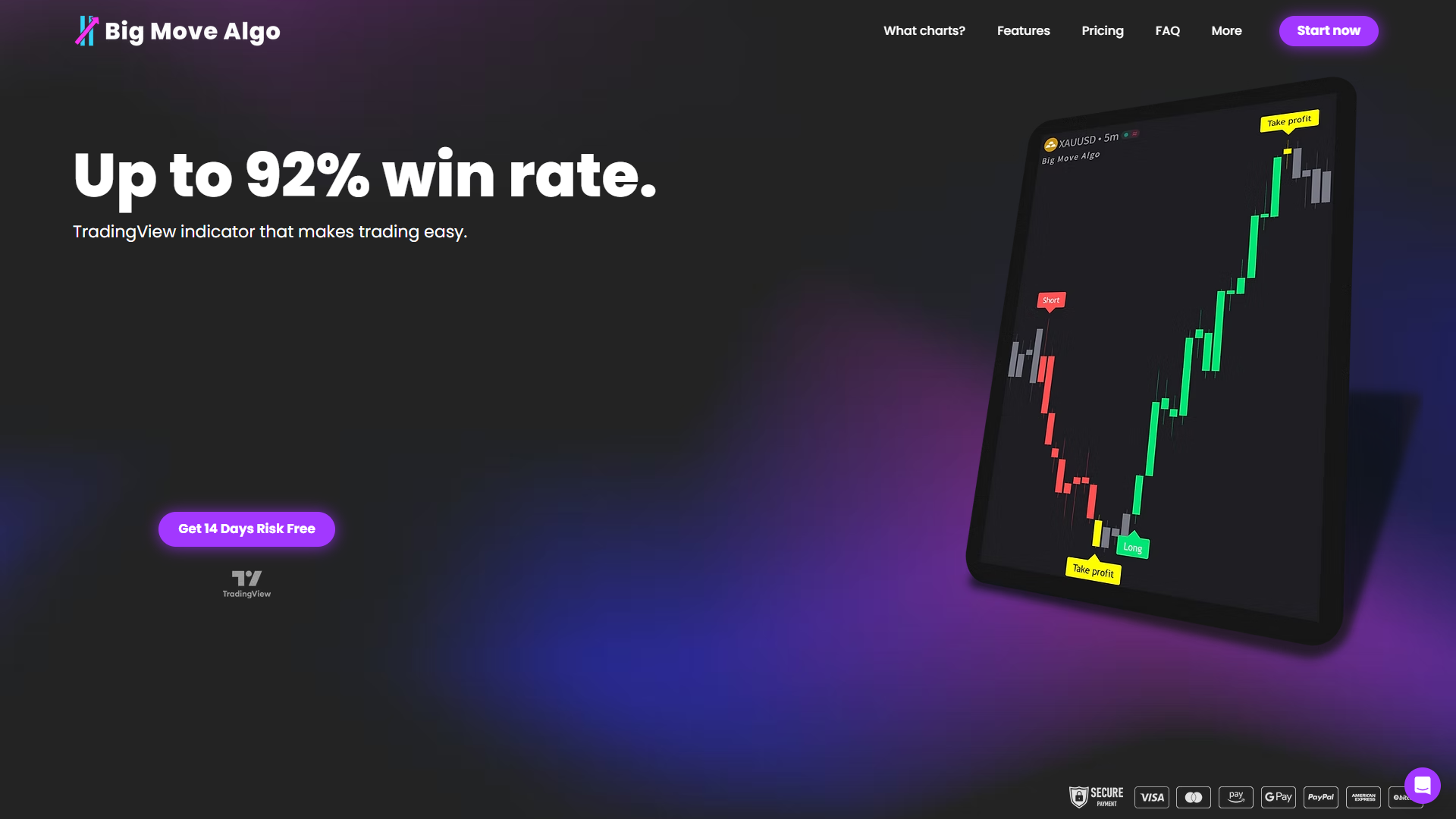
Some trading indicators offer modes for beginners and experienced traders, such as simple structured setups and more manual control. Some include features that help filter out choppy, low-quality market conditions where neither bias has an edge. If you want to see how clear long/short signals can replace the guesswork in your own trading, visit Bigmovealgo and start with a paper-trade run before committing real capital.
Where to Go for the Official Rules and Definitions
SEC: margin and account rules straight from the regulator
Investor: plain-language basics on long and short positions
Investopedia: long/short equity fund structure explained
OptiNod Academy: how to read the long/short ratio correctly
This article is general information, not a substitute for advice from a qualified financial advisor. Consult a qualified financial professional about your own circumstances before acting on anything here.
Sources
Recommended
Comments