
Reduce Trading Emotions in One Week with a One Page Plan


Stop trying to be emotionless. Willpower fails under pressure, so replace it with a one-page trading plan, a pre-trade checklist, hard risk caps, and two or three in-the-moment regulation techniques you can run in under a minute. Add a journaling habit that turns each blown trade into one new rule. That combination, not raw discipline, is what actually reduces trading emotions.
TL;DR:
Trading success relies on strict adherence to a one-page plan with approved setups, fixed risk, and daily loss caps, rather than relying on willpower.
Risk controls like auto-setting stops and limiting daily drawdowns prevent emotional reactions, with 0.5% to 2% risk per trade being most effective.
Naming emotions during trades and cyclic sighing techniques help reduce physiological arousal and interrupt emotional spirals that lead to revenge trading.
Maintaining long-term resilience involves routine practices such as adequate sleep, regular exercise, and graduated position size increases after consistent rule adherence.
Using specialized tools like Big Move Algo enforces rule compliance through signals and automation, reducing emotional bias and increasing discipline under pressure.
Table of Contents
What Goes Into a One-Page Trading Plan and Checklist
A trading plan you can’t fit on one page is a plan you won’t follow at 2:00 p.m. when a trade goes against you. Investopedia’s review of rules followed by professional traders points to the same core structure over and over: defined markets, approved setups, fixed risk, and a hard ceiling on activity.
Your one-page plan needs six things:
Markets you trade (crypto, forex, stocks, indices, or commodities, named specifically, not “whatever moves”).
Approved setups only (if a trade doesn’t match one of your two or three patterns, it doesn’t happen).
Risk percent per trade (a fixed number, not a mood-dependent range).
Stop logic (where the stop goes and what moves it, decided before entry).
Max trades per day (a hard number, usually three to five for a retail account).
Daily loss cap (the point where you’re done, win or lose).
The checklist is what stops you from skipping the plan when a setup “feels right.” Before entry, answer these yes or no:
Does this match an approved setup on my plan?
Have I already hit my daily loss cap or max trade count?
Is my stop placed before I click buy or sell?
Am I sizing this at my fixed risk percent, not more?
Have I traded in the last 15 minutes on a loss (cooling-off check)?
Would I take this trade if I’d been flat all day?
A single “no” means you don’t take the trade. No exceptions, no “just this once.” The TraderNest framework calls this structure a substitute for willpower, and that’s the right way to think about it: the checklist does the deciding so you don’t have to negotiate with yourself mid-session.
Which Risk Controls Actually Stop Emotional Overrides?
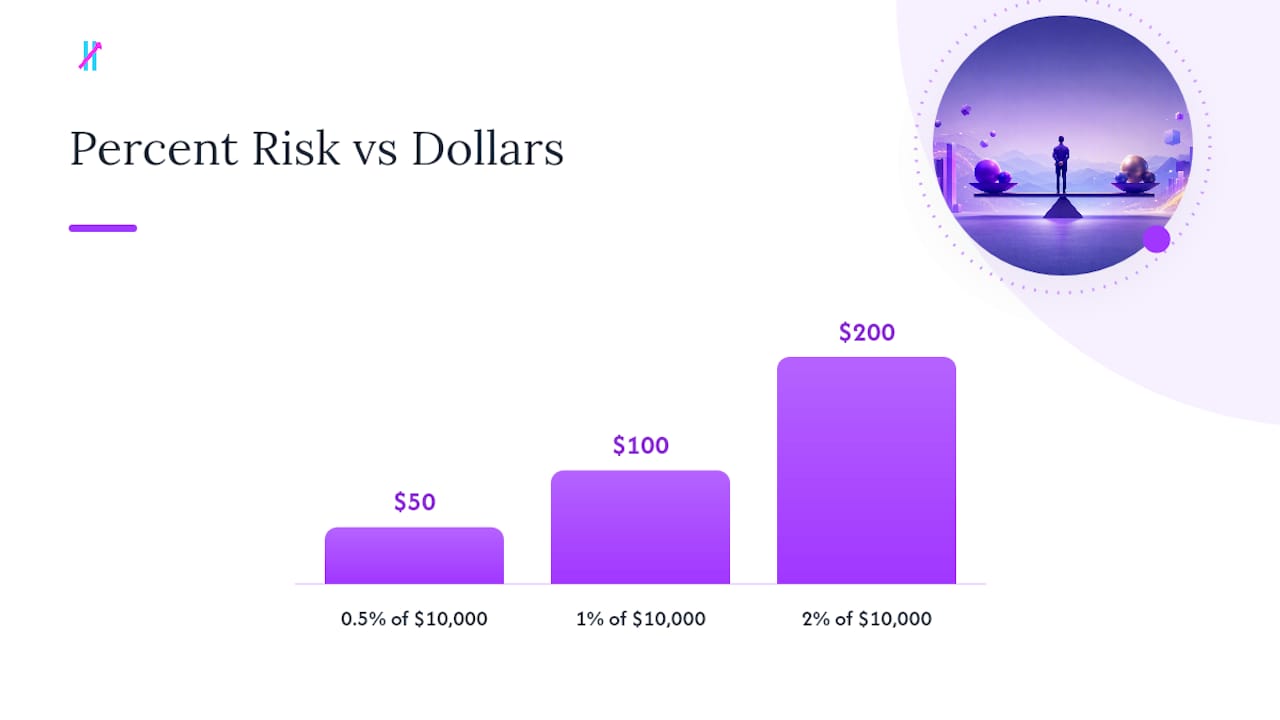
Percent risk beats dollar risk because it scales with account size and removes the anchoring effect of a big-looking number. Risking 0.5% to 2% per trade on a $10,000 account means $50 to $200 at stake, a number small enough that one loss doesn’t trigger the fight-or-flight response that drives revenge trades.
The number that matters: research on trader discipline found that speed of loss-cutting and avoidance of large drawdowns correlate positively with future trading success. Traders who close losers fast, mechanically, outperform those who “wait and see.”
Build these three layers into every session:
Daily loss limit: stop trading at 3% account drawdown or after three losing trades, whichever comes first.
Automated stops: set the stop order the instant you enter, not after you “see how it goes.”
Time-based exits: if a trade hasn’t hit target within your setup’s normal timeframe, close it rather than let hope replace analysis.
Trailing stops and preset exits work because they take the decision away from you at the exact moment you’re least equipped to make it. A tool that fires a preset exit indicator removes the “just a little longer” impulse entirely.
How Do You Regulate Emotions in the Moment?
Suppressing a feeling burns cognitive energy and makes you worse at following rules, not better. The fix is naming the emotion instead of fighting it. A 2007 UCLA study found that affect labeling measurably dampens amygdala activity, which is the brain region driving the panic-sell or revenge-buy impulse. Say it out loud or type it in your journal: “I’m angry because I got stopped out twice.” That single sentence hands control back to the prefrontal cortex.
Cyclic sighing works faster than most breathing techniques traders try. Stanford researchers found this exact protocol reduces physiological arousal better than several alternatives tested:
Inhale through your nose.
Take a second, shorter inhale on top of it (this is the “cyclic” part).
Exhale slowly through your mouth, twice as long as the inhale.
Repeat for 60 to 90 seconds before you touch your mouse again.
Implementation intentions do the heavy lifting before the trade even happens. Decide now: “If I’m down two trades in a row, then I close the platform for 15 minutes.” Gollwitzer’s research on if-then planning shows this kind of pre-commitment creates what psychologists call strategic automaticity, meaning the response fires without a conscious decision under stress.
Pro Tip: Write your if-then rules on a sticky note on your monitor, not buried in a notes app you’ll never open mid-trade.
When a spiral starts, redirect attention physically. Stand up, look out a window, name three objects in the room. That break in visual focus, paired with temporal distancing (“how will I feel about this trade in a week?”), interrupts the loop before it turns into a revenge entry. Our trading psychology guide covers the trigger side of this in more depth.
Why a Trading Journal Matters More Than a Trading Plan
Your plan tells you what to do. Your journal tells you whether you’re actually doing it, and where the gap is.
Every entry needs four fields:
Setup used (which approved pattern triggered the trade).
Risk taken (the actual percent, not the intended one).
Plan adherence (did you follow the checklist, yes or no).
Emotional label (one word: anxious, bored, confident, angry).
Run a 30-minute review every weekend. Pull your last 50 trades, sort by outcome, and look for the one emotional label that shows up most often next to your losses. Add exactly one new rule to address it. That’s the whole cycle, and it works because it avoids the overwhelm of trying to fix five habits at once.
Automated journals close a real gap: manual logs miss patterns because people underreport their own tilt. Platforms with auto-sync and pattern detection flag revenge trades and premature exits faster than a Sunday-night memory ever will. If you’re logging fewer than 20 trades a week, a manual trading journal is fine. Above that volume, automation earns its keep. Tools built for performance tracking can also surface win-rate trends by setup, which speeds up the weekly review.
How Do You Build Long-Term Emotional Resilience?
Rules reduce emotional trading in the moment. Resilience is what makes those rules easier to keep next month, and the next.
Graduated exposure is the single most underused technique here. Increase position size only after you’ve demonstrated rule adherence at a smaller size for a set period, usually two to four weeks. Jumping straight to full size after a good week is how discipline collapses.
Physical condition sets the ceiling on your self-control. Poor sleep and skipped exercise shrink the same prefrontal capacity you need to follow your checklist under pressure. A fixed pre-market routine, coffee, a five-minute review of your plan, a glance at economic calendar events, anchors your state before the first trade rather than after the first loss.
Sleep at least seven hours before a trading session; sleep debt degrades impulse control measurably.
Exercise regularly; it builds the same cognitive reserve you draw on when a trade moves against you.
Run the same pre-market routine every day so your first decision of the session isn’t emotional.
Talk to another trader or a small accountability group when a losing streak starts to feel personal.
How Big Move Algo Turns These Rules Into Signals
Steven Hartwell built Big Move Algo around one idea: rules only work if they survive contact with a live chart, and most traders break under pressure because their plan lives in a notebook, not on the screen in front of them.
The tool translates the checklist logic above into signals you can actually act on:
Long, Short, and Exit signals remove the “should I get out now” debate that fuels revenge trades.
AUTO Mode enforces a consistent entry and exit rule set with minimal setup, which matters most on the days you’re least trusting your own judgment.
Fake Trend Detector filters out the choppy, low-quality conditions where discretionary traders usually get baited into emotional entries.
Manual Mode lets experienced traders keep customization once their rule adherence is proven.
Try running your one-page plan with AUTO Mode at reduced size for one week, journaling every trade against your checklist, before scaling up.
A Candid Note on Tilt, Recovery, and Systems
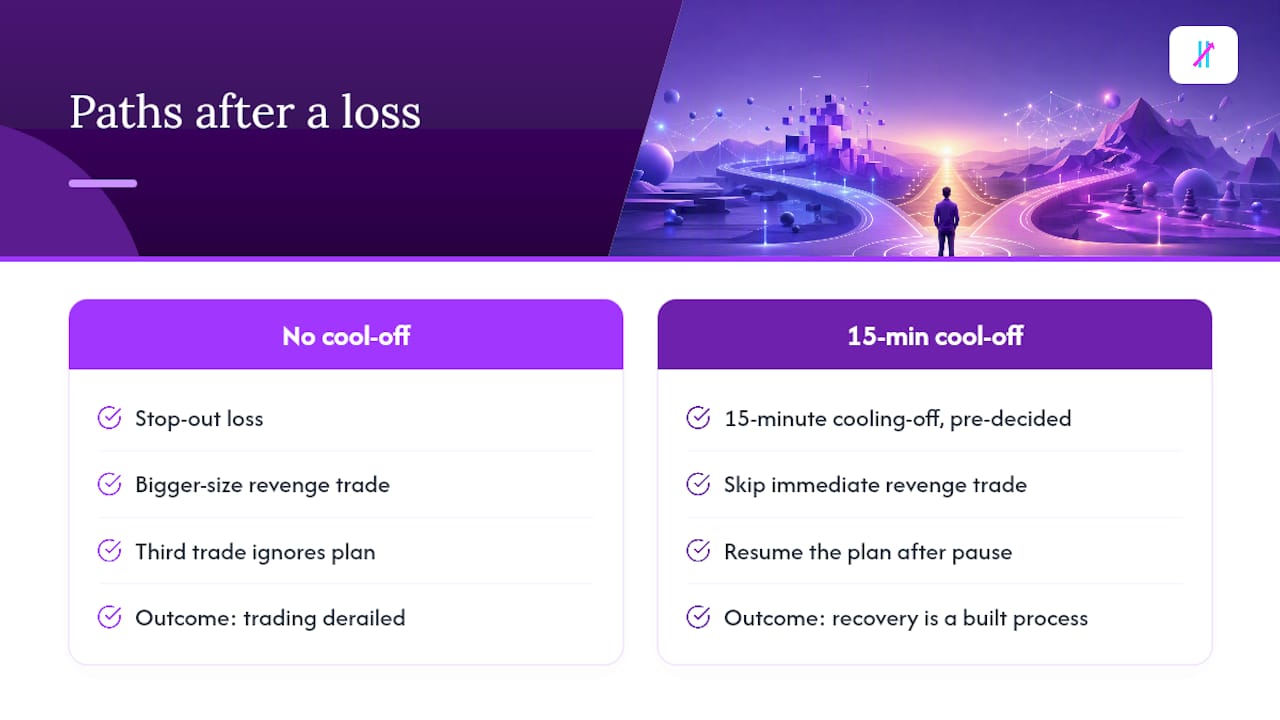
I’ve watched the same pattern derail otherwise good traders: one stop-out, then a bigger size trade to “get it back,” then a third trade that ignores the plan entirely. The rule that stopped it wasn’t more discipline. It was a hard 15-minute cooling-off after any loss, no exceptions, decided in advance.
Test one small rule this week. Recovery from a bad trading day is a process you build, not a character flaw you fix by feeling worse about it.
— Steven Hartwell
Try Big Move Algo Instead of Fighting Your Own Willpower
Willpower runs out exactly when you need it most, usually three trades into a losing streak. Big Move Algo is built for that gap: instead of asking you to stay calm under pressure, it hands you a Long, Short, or Exit signal so the decision is already made before the emotional spiral starts.
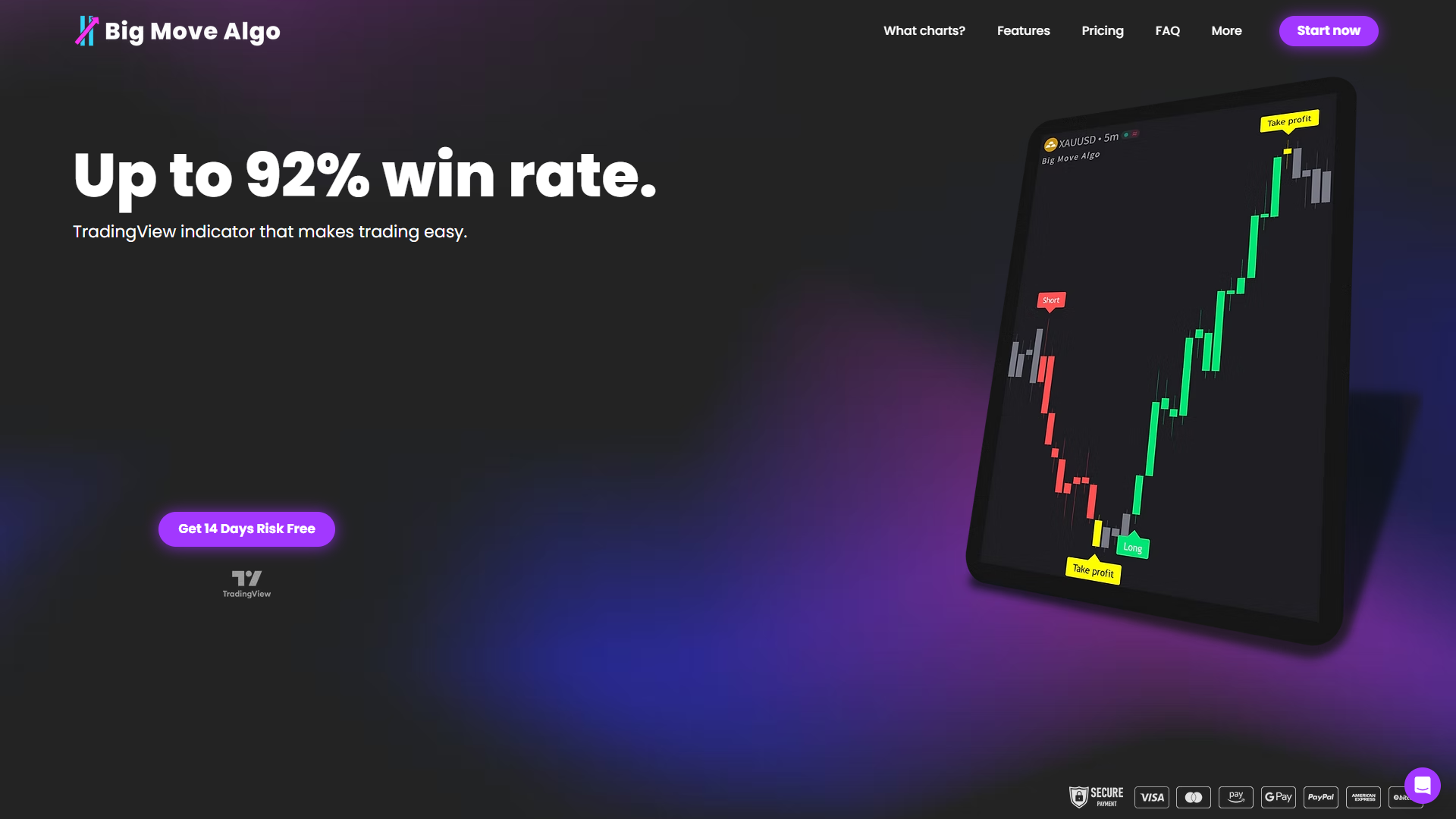
Start small. Run AUTO Mode at reduced position size for one week, log every trade against the checklist from this article, and see whether your plan adherence improves once the exit decision isn’t yours to second-guess. The Fake Trend Detector helps filter out choppy sessions where discretionary calls tend to fail, and device access allows signals to be available on multiple platforms. If you’re ready to see it on your own charts, check out Big Move Algo and start the one-week trial protocol today.
Sources
Recommended
Comments