Cut Losers Quickly: A Practical Exit Plan for Traders

You cut losers quickly by deciding the exit before you enter: a written stop at the price where your trade idea is wrong, a position size that makes that stop cost a small fixed percentage of your account, and an alert or resting order that acts when you are not staring at the screen. Letting winners run is the same discipline in reverse. Big Move Algo gives TradingView users Long, Short and Exit signals, so the exit is a defined event on the chart instead of a feeling in the middle of a losing trade.
This guide walks through the routine step by step, with the numbers, the order types and the mistakes that turn a small loss into a large one.
TL;DR
- Write the stop and the profit target before you click buy or sell. A stop that exists only in your head does not count.
- Size the position from the stop distance. Risking 1% to 3% of the account per trade is the range CME Group suggests for newer traders.
- Place the stop where the trade idea fails, not where it is comfortable. ATR-based distances keep normal noise from tagging you out.
- Let winners run with a rule: a target, a trailing stop or an exit signal. Pick one before the trade starts.
- Filter out choppy, fake-trend conditions so you take fewer trades that need cutting at all.
Table of Contents
- Why cutting a loser feels so hard
- Step 1: Write two exits before every entry
- Step 2: Put the stop where the idea fails
- Step 3: Size the position from the stop
- Step 4: Use orders and alerts so you do not have to be brave
- Step 5: Let winners run without giving the gain back
- Step 6: Take fewer trades that need cutting
- Step 7: Review every trade, especially the ones you did not cut
- A one-page routine
- Our view on cutting losses
- Put the exit on your chart
- FAQ
- Sources
Why cutting a loser feels so hard
A losing trade asks you to admit a mistake in real time, with money attached. So you hope, move the stop, add “just a little more time,” and a 1% loss becomes a 6% loss. A winning trade does the opposite: it pays you a small gain, and you take it before it can vanish.
The result is a lopsided account. Many small wins, a few large losses, and an average loss bigger than the average win. Hit rate alone does not save you, because what matters is how much you lose when you are wrong compared with how much you make when you are right.
CME Group’s trade-plan course states the cause plainly: without clear, written entry and exit criteria, decisions tend to be driven by emotional responses rather than strategy. The fix is not more willpower in the moment. It is moving the decision to a time when you are calm: before the trade.
Step 1: Write two exits before every entry
The same CME Group lesson says professionals play defense first, because exit points matter more than entries. Every trade needs at least two written exits: a stop loss and a profit target. It specifically says that mental stops do not count.
A workable pre-trade note takes thirty seconds:
- Direction and instrument (for example, long ETH/USD).
- Entry price or zone.
- Stop price, and the reason that price means the idea is wrong.
- Target price, or the rule that will close the trade (a trailing stop, an Exit signal).
- Dollar amount at risk.
Where this goes wrong: traders write the target and skip the stop, or write a stop and then move it further away once price approaches. If you move a stop, move it only in the direction of protecting profit, never toward more risk.
This is also where a signal tool earns its place. With Big Move Algo, the Long, Short and Exit signals appear on the TradingView chart, so your entry and one of your exits come from the same system. Our guide to exit signals explains how to treat an Exit as a rule you follow instead of a suggestion you debate.
Step 2: Put the stop where the idea fails
A stop has one job: mark the price at which your reason for the trade no longer holds. CME Group advises placing stops at a logical level, not at random or where normal market movements could easily trigger them. OANDA’s US education page adds that stop width should come from objective technical analysis such as ATR (average true range, a measure of how far an instrument typically moves in a period) rather than a random guess.
Two practical ways to set it:
- Structure stop: just beyond the swing low (for a long) or swing high (for a short) that your setup depends on.
- ATR stop: a multiple of ATR from your entry, so the stop breathes with the instrument’s volatility. A quiet stock and a volatile altcoin should not share the same dollar distance.
A common mistake is working backward: picking the position size you want and then squeezing the stop to fit. OANDA lists artificially narrowing stops to force a larger size as one of the four classic errors. If the right stop is too far away for your risk limit, the answer is a smaller position or no trade. For defaults and worked numbers, see our walkthrough of ATR stop loss placement.
Step 3: Size the position from the stop
This is the step that makes cutting losers painless. If a stop-out costs 1% of your account, you can take it without drama and move on. If it costs 8%, you will not honor it.
CME Group says position size needs two inputs: where the stop goes, and the percentage or dollar amount you are willing to risk. It suggests newer traders risk 1% to 3% of the account per trade, noting that 1% of a $50,000 account is $500. OANDA says professionals frequently keep risk between 1% and 2% per trade.
Worked example (stock):
- Account: $20,000. Risk per trade: 1%, so $200.
- Entry: $50.00. Stop: $48.00. Risk per share: $2.00.
- Position size: $200 divided by $2.00 equals 100 shares.
- If the stop is hit, you lose about $200, which is 1% of the account.
Size from dollar risk, not from margin. Margin is collateral, not risk: a position that fits your buying power can still produce a loss you never intended to take. Our article on position sizing with 1% fixed fractional and ATR carries the same arithmetic into crypto and forex.
A note for U.S. day traders: the question “why is $25,000 required to day trade?” refers to FINRA’s pattern day trader rule for margin accounts. Check your broker’s current requirements for how it applies to your account.
Step 4: Use orders and alerts so you do not have to be brave
The best way to cut a loser quickly is to make the cut automatic. IG explains that a resting stop order closes your position if the market hits your level, even when you are not logged in, removing the need to decide under pressure. It also advises deciding the stop before opening the position and setting it as you execute, so the trade is never left unprotected.
Know the limits of the order type. Fidelity notes that a stop-loss order becomes a market order once triggered and does not protect against sudden price gaps. Gaps happen on earnings, overnight news and thin weekend crypto or forex sessions. That is another reason to keep position size small: your risk limit should survive a stop that fills a bit worse than planned.
On TradingView, Big Move Algo delivers alerts to multiple platforms and supports integration with automated trading platforms, so an Exit signal can reach you wherever you are or be passed to an automated setup. If you automate, read our risk controls for automated TradingView trading first, and our piece on broker-aware trailing stop alerts for how alerts and orders fit together.
Step 5: Let winners run without giving the gain back
Cutting losers is half of the old trading maxim. The other half only works if the average winner is meaningfully larger than the average loser. You have three main tools, and you should choose one per strategy before entering.
| Exit method | How it works | Best fit |
|---|---|---|
| Profit target | Fixed price or reward-to-risk multiple, such as 2:1 or 3:1 | Range-bound or short-term setups |
| Trailing stop | Exit trigger follows price as it moves in your favor | Trending moves |
| Exit signal | A rule on the chart tells you the move is losing strength | Active traders who want a defined rule |
Fidelity describes these families: target profit/loss ratios (it gives 2:1 and 3:1 as examples), technical exits and time exits, plus trailing stop orders that adjust the trigger as price moves your way, creating a high-water mark that can lock in gains.
CME Group’s approach is a middle path: at the target, sell a portion of the position and move the stop on the remainder to break even. You bank something, and you can no longer turn the rest into a loss.
If you want to weigh trailing stops against plain stop losses before you commit, this breakdown of when to use a trailing stop covers the position rules. For exit tools aimed at active traders, our list of exit indicators for day traders is a good next read.
Step 6: Take fewer trades that need cutting
The cheapest loser is the one you never take. A large share of stopped-out trades come from entering during sideways, noisy conditions where a “trend” is just random movement. These fake trends tempt you in, reverse quickly and leave you hitting your stop again and again.
A few habits reduce them:
- Check a higher timeframe. If you trade the 5-minute chart, look at the 15-minute or hourly chart to see whether the direction agrees.
- Look at volatility. Flat, tight ranges with small candles rarely deliver follow-through. Wait for the range to resolve.
- Require confirmation, not hope. An entry rule written in advance beats an entry that “feels right.”
- Be selective by market. Crypto, forex, stocks, indices and commodities each have hours and rhythms where trends are cleaner.
This is the job of the Fake Trend Detector built into Big Move Algo: it helps filter out low-quality or misleading market conditions where trading may not be recommended. Skipping those conditions means fewer trades, fewer small losses and fewer decisions to make under stress. AUTO Mode lets you start with minimal setup, and Manual Mode is there when you want to tune it as you gain experience.
Step 7: Review every trade, especially the ones you did not cut
A stop you honored costs a defined amount. A stop you ignored costs whatever the market decides. A journal shows you which one is happening. After each trade, record the planned stop, whether you followed it, how much you lost or made in R (multiples of your initial risk), and what you would do differently.
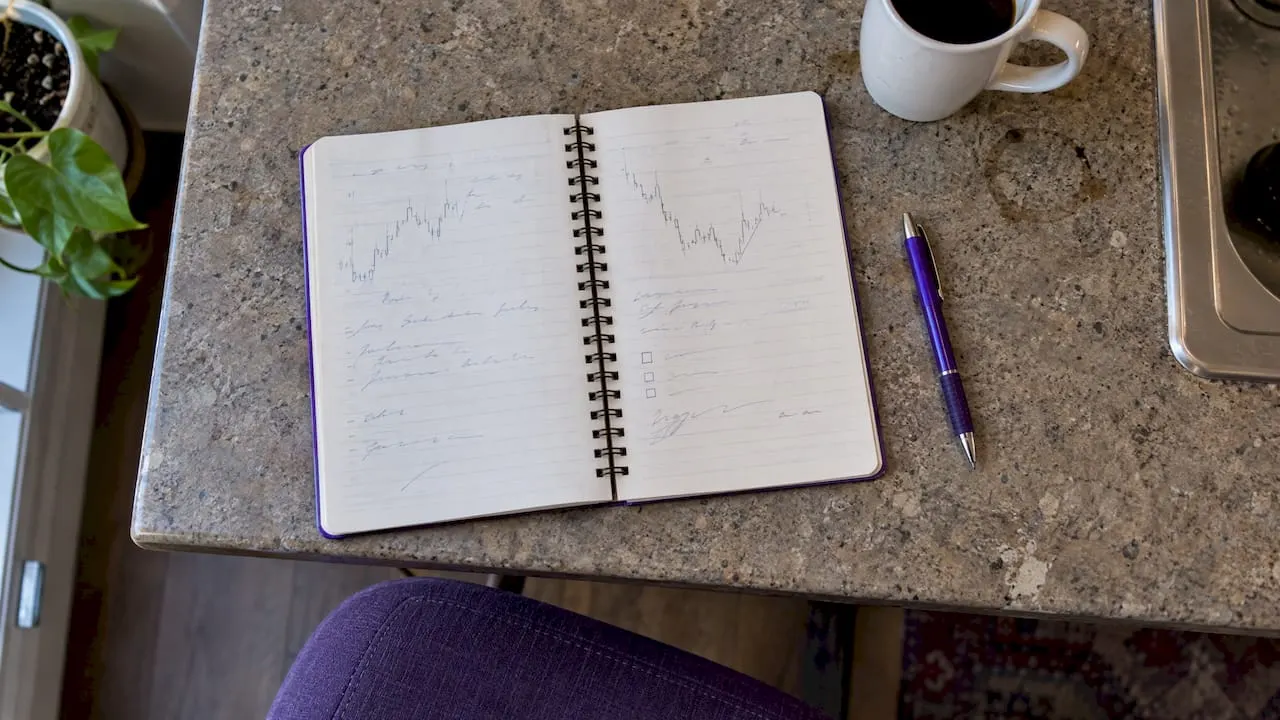
Within a month, patterns show: you move stops on Fridays, you hold crypto losers longer than stock losers, you close winners at 1R when your plan said 2R. Our guide to keeping a trading journal shows what to log. If you backtest your rules before trading them live, run the backtest pitfalls checklist so a flattering test does not give you false confidence.
A one-page routine
- Before the session: decide the maximum dollar risk per trade (for example, 1% of the account) and the maximum loss for the day.
- At the setup: write entry, stop, target or exit rule.
- Compute size from the stop distance.
- Place the stop order or alert immediately on entry.
- Manage only in the direction of safety: partial profit, then stop to break even.
- Close the trade when the stop, target or Exit signal says so.
- Log it.
Nothing here requires prediction. It requires doing the same boring thing every time.
Our view on cutting losses
Most traders do not lose because they lack an entry. They lose because the exit is left to the moment, and the moment is the worst time to make it.
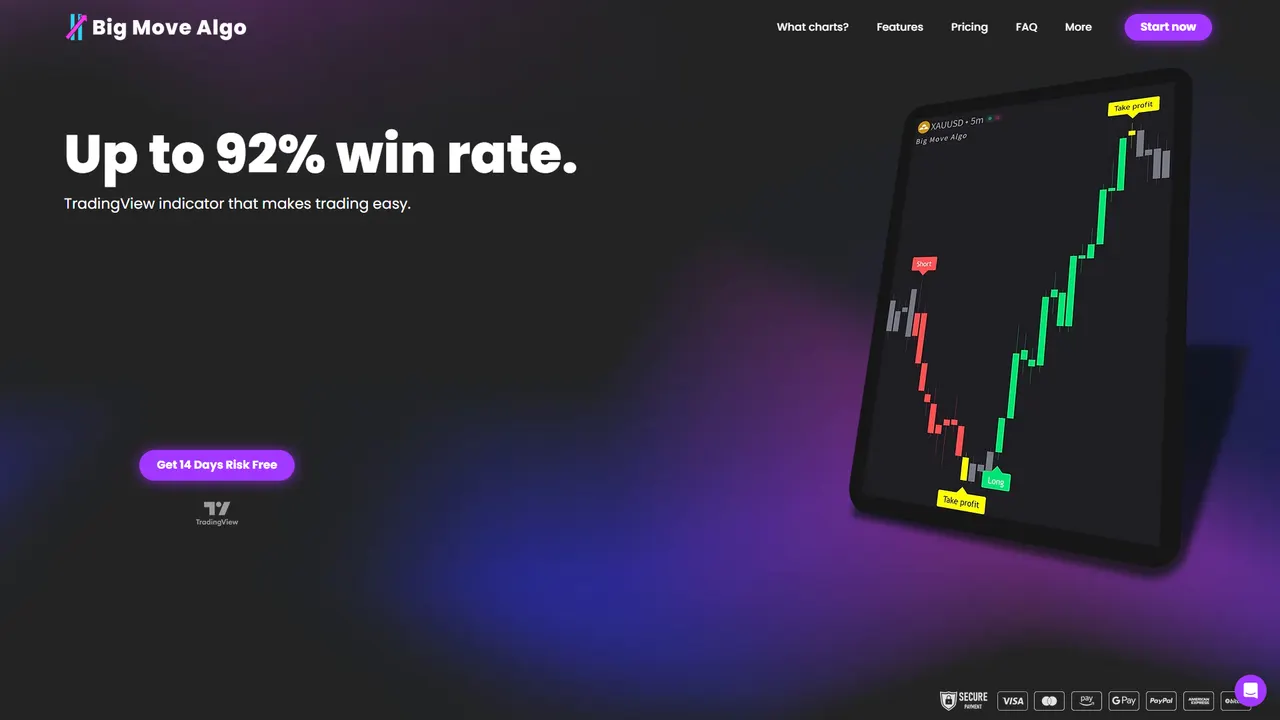
That is why we built Big Move Algo around clear Long, Short and Exit signals. An exit that appears on your chart as a defined signal is easier to follow than a decision you have to invent while a position is bleeding. We designed it to reduce guesswork and emotional decision-making, and the Fake Trend Detector is there to help you stay out of conditions where trading may not be recommended in the first place.
We also built it to be simple. AUTO Mode needs minimal setup, so a newer trader can follow a structured process from day one, while Manual Mode gives experienced traders room to customize. It does not repaint, so what you see on the chart is what you can trade on.
Pair the signals with the habits in this guide: a small fixed risk per trade, a stop you set before entry, and a journal. That combination is what turns a tool into a system.
Steven Hartwell
Put the exit on your chart
Big Move Algo is a TradingView indicator that analyzes markets in real time and gives Long, Short and Exit signals across crypto, forex, stocks, indices and commodities. It works on unlimited devices, sends alerts to multiple platforms, and includes free updates, with instant access after purchase.
Plans are billed monthly or yearly: Version 2 is $55 per month or $660 per year, Version 3 is $64 per month or $768 per year, and Version 3 Plus is $79 per month or $948 per year. You can compare them on the Big Move Algo plans page, and the how-to-use guide shows the setup.
FAQ
How much of my account should I risk on one trade?
CME Group recommends newer traders risk a modest 1% to 3% of the account per trade, and OANDA says professionals often keep it between 1% and 2%. On a $10,000 account, 1% is $100. Choose a figure you can lose repeatedly without changing your behavior.
Should I use a stop loss or a trailing stop?
Use a fixed stop to define your initial risk, then decide whether a trailing stop, a profit target or an exit signal manages the trade afterward. Trailing stops suit trending moves, while targets suit shorter-term setups. Choose before entry so you are not improvising mid-trade.
How do I let winners run without giving back profit?
Take a partial profit at your first target and move the stop on the rest to break even, as CME Group’s trade-plan course describes. After that, the remainder can ride a trailing stop or an Exit signal. The trade can no longer turn into a loss.
How do I avoid fake trends?
Confirm direction on a higher timeframe, skip tight and choppy ranges, and use written entry rules. Big Move Algo’s Fake Trend Detector is built to filter out low-quality conditions where trading may not be recommended.
Sources
- CME Group: Step 4, Trading Strategies in Your Trade Plan
- CME Group: Proper Position Size
- OANDA: Position size calculator and risk management principles
- IG: Planning your exit
- Fidelity: Exit Strategies
- StockPilot: Trailing stop vs stop loss